


The AVS is (debatably) the most load-bearing and popularized plate carrier on the market, which often begs the question of how has a plate carrier, with over 12 years of service, retained its relevance to the consumer…and does it still? With the ever-evolving nature of today’s threats following the Global War on Terror (GWOT), the Adaptive Vest System (AVS) by Crye Precision has enjoyed continued longevity by using a design that set the standard for many newer plate carriers of today. Yet while the AVS has a wide, almost cult-like following, consumers and professionals alike are left to consider if the AVS is still relevant to today’s issues, and justifies its extensive cost.


Background
To understand what the AVS is, and how it fits into the modern spectrum of today’s issues, it is important to (briefly) review how plate carriers first came into the mainstream.
Plate carrier history
Early armor (during the Middle Ages through WWI) was often simplistic and expensive, marking one as either wealthy (in comparison to the general population at the time) or a part of the nobility/politically elite. During the 1500s with the advent of gunpowder to Europe, Italians used bulletproof vest, known as Lamellar Armor, or used layered plates of metal, such as Cuirass Armor.


By the 1800’s, individual armor had grown to include more commonplace fabrics, such as soft Japanese body armor using densely woven silk. By the end of WWI in 1918, criminal elements in America began integrating Japanese silk armor as part of their crimes, which in turn drove federal authorities to begin considering its own protective garments.


Despite this, body armor up until the mid 19th century was still relatively rare due to expense and provided little-no ballistic protection against anything but the smallest caliber projectiles.
World War II
When WWII took place (1939-1945) the United States developed the M1-M5 series of flak jackets, that were made from a combination of ballistic nylon and other materials. These flak jackets mainly focused on protecting air crews inside bombers and used manganese steel plates, with canvas woven into heavily reinforced pockets, and worn over clothing.


Korea War Flak Jacket
By the time the Korea War (1950-1953) came along, the United States had moved on to the M-1951 flak jacket that was made with “Doron” fiberglass plates, according to an article in the Special Operations publication Veritas. 1 In the M-1952A flak jacket, the Army opted to use aluminum plates in lieu of the fiberglass. By the time the M-1955 was developed, it utilized a combination of both the fiberglass and aluminum materials, according to an online article by Chain Link and Concrete. 2 These would later be replaced by the M-69 well into the Vietnam conflict.


Vietnam to the Gulf War
As the Vietnam War (1955-1970) dragged on, DuPont chemist Stephanie Kwolek developed a new type of ballistic Kevlar in 1965, a material that was researched by the National Institute of Justice in 1971 to become one of the key fabrics in many of today’s modern protective items. 1 The Vietnam conflict yielded troops with the Personnal Armor System for Ground Troops (PASGT), with prototypes developed throughout in 1957 and released as a complete system in 1983. By the early 1990s, the PS-930 Ranger Body Armor (RBA) was fielded by the 75th Ranger Regiment, and was the first protective armor to utilize an eight pound aluminum oxide ceramic plate over the kevlar fabrics of the PASGT. The RBA saw heavy use in the U.S. intervention of Somalia and marked a transitional point in history where the military began moving away from dated flak jacket protective garmets. Just a few years later in 1996, the Army fielded the Interim Small Arms Protective Overvest (ISAPO). 1 In 1999, U.S. Special Operations funded the SOF Equipment Personal Advanced Requirements (SPEAR) program, which led to the Body Armor and Load Carrying System (BALCS).


Global War on Terror (GWOT)
The Interceptor Body Armor (IBA) & Outer Tactical Vest (OTV) were introduced in 2000, and used throughout the Global War on Terror (2001 – 2020) until 2020. 1 Currently, the issued Improved Outer Tactical Vest (IOTV) was introduced in 2007, and although is still used throughout the military it is based on specific theatres/roles, and slowly being phased out.


Adaptive Vest System (AVS) introduction
The AVS was first Introduced by Crye Precision in 2012 as an alternative to the (then) issued IOTV. The intent of the AVS design was to be both scalable and customized for most missions, while still offering support to prevent fatigue. Due to its limited fielding, the AVS initially was only integrated with high-risk units (i.e. Special Forces).


GWOT circa the AVS
One of the aspects that influenced the design of the AVS was the Iraqi side of the GWOT – Operation Iraqi Freedom (2003-2011). This war started as a conventional conflict that mostly failed to materialize, but transitioned quickly to an insurgency once the centralized Iraqi government collapsed. These threats included militants that were able to move quickly and utilize cached weapons. In contrast US soldiers struggled with encumbered gear and needed to carry extensive ammunition and supplies. In addition, the Iraqi theatre ranged from the vast deserts in the southwest, to the dense urban areas of the cities, and higher elevated regions of Iraqi’s northern Kurdish region. Ultimately, the conflict boiled down to al Qaeda in Iraq (AQI) and Iranian-sponsored militias that fought the US nearly the entire duration of the occupation. One of the main lessons learned about gear during that time was ne need to make it more breathable and dynamic to address a wide range of requirements, while sacrificing as little protective measures as possible.


Opposite to Iraq was Afghanistan where Operation Enduring Freedom (2001-2021) was the other half of the GWOT. This theatre was more mountainous in most of the country, and some deserts further south. However, here soldiers needed to carry much more of their gear as much of the conflict was not fought in the urban areas, but the rural regions with little chance of immediate resupply or reinforcement. As the haven for al Qaeda (AQ) and sympathetic groups like the Haqqanni, soldiers were forced to reconcile the larger distances needed to travel and engage threats, while gear was often found to be just as antiquated as in Iraq.


The AVS
Since its introduction in 2012, the AVS and its design has remained largely unchanged, and today is still a commonplace issued item in many military units. When initially introduced, the AVS was intended to replace the Department of Defense’s heavier/bulkier OTVs and IOTVs utilized by Special Operations, with the intent to filter down to the rest of the military at later dates. Crye was also seeking to phase out its Modular Body Armor Vest (MBAV) that had been designed and licensed to it by Eagle Industries.
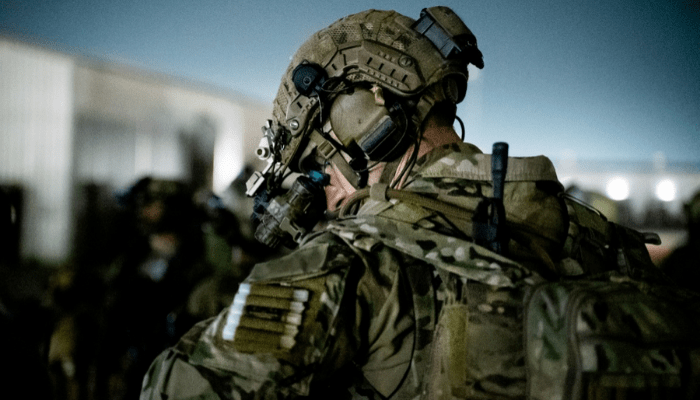

The first unit to test the AVS was the 75th Ranger Regiment, while it was later issued to the 1st SFAB in 2017 ahead of a forthcoming deployment. Afterwards, the AVS began to slowly filter down through Tier I and II units, before being introduced into broad-scale conventional forces.


Design
At its introduction at SHOT Show, the AVS was described by (then) Crye Precision owner Caleb Crye as an “in between” the ultra-light Jumpable Plate Carrier (JPC) (introduced in 2015) and the more structured CPC. One of the notable highlights for the AVS, was that the carrier was one of the first to be designed from the beginning for full-scale configuration—from base configuration, to full assault.


The AVS also included use of structural harness to mitigate heavier loads on the torso.


But one restrictive aspect for the AVS to the civilian market has been (and continues to be) its exorbitantly high cost. Additionally, the AVS has a substantial weight due to the Cordura nylon used mainly throughout its design. When wet (either through environmental factors or sweat), the AVS can nearly double in overall weight.
For a full detailed review of Crye Precision’s AVS by High Ground Media, click here.
How the world changed
But the nature of conflict has taken on dynamic changes since the days of insurgencies in Iraq and Afghanistan. As the conflicts have dynamically changed, this leads many to wonder if the AVS retains its relevancy.
Since 2012, several major operations have involved US forces wherein the AVS has seen (or continues to see) service and include:
- Uganda (Observant Compass) 2011-2017
- Niger (Juniper Shield) 2013 – present
- Syria (Inherent Resolve) 2014 – present
- Libya (Inherent Resolve) 2015 – 2020
- Israel (Prosperity Guardian) 2023 – present


These theatres have pushed the requirements and designs of gear further by being increasingly dynamic, forcing servicemembers to adapt the individual components of their equipment to meet mission or individual needs. Conflicts in Africa, Syria, and Libya remain in high-mobility desert regions like those experienced in Iraq, and reflect the continued requirements to meet threats in those environments. Yet the weight soldiers have needed to carry still remains high.
How the industry responded
In the conflicts since 2012, industry partners have continually sought ways to improve the performance of their gear, minimize cost to the vendor, and address the challenges of today’s modern threats. Additionally, each is attempting to attract the attention of the Department of Defense for the “next generation” of plate carrier. Using input provided by those from recent conflicts, carrier design has become more modular since the IOTV days.
More modern carriers have designs that enable components to be interchanged with others (often considered as modular type carriers), typically across other platforms within the same company product line. This improves interchangeability and offers more dynamic roles as opposed to dedicated carriers that are designed for a singular role. This includes the advent of removable front placards and backpanels, removable cummerbunds, and tube-type buckles since 2012. The negative aspect was that these design changes came at the expense of structural elements, like what the AVS had in its harness.


Modern carriers also take advantage of integrating lighter materials that weren’t widely utilized when the AVS was released. Newer fabrics like laminate nylon (aka “squadron” material), Tegris, and Hypalon (aka Chlorosulfonated Polyethylene Rubber) have allowed carriers to become a fraction of their previous weight, while still retaining the same (if not greater) abrasion ratings and tensile strength. Even its recent release of the R-Series JPC illustrates how Crye is looking for improved designs.


Plate carriers today
Today, many of the latest plate carriers utilize hybrid elements, which can be traced back to the AVS. Some examples of these type of hybrid carriers include the Plate Carrier 24 by Whiskey Two Four that has a semi-rigid cummerbund that uses the same slotted front and rear plate bag attachment approach as the AVS.

The design of the ARC plate carrier by Shaw Concepts utilizes Tegris (a newer variant of thermoplastic that is lighter than previous laminate nylon, yet stronger) in the cummerbund to provide similar structural support as the AVS.

Aftermarket accessories, such as structural shoulder pads and cummerbunds by AXL Advanced, are intended to offer end users the ability to upgrade their traditionally designed carriers to something that has the same structural benefits as the AVS. The Ergo Performance System by Eagle Industries is another accessory that was based on the weight distribution aspects of the AVS harness.


Conclusion
The AVS is a dated carrier, now based on a 12-year approach to fabrics, how the warfighter is supported, and how the military addresses individual equipment based on past conflicts. However, for civilians who may not need (or utilize) the full structural aspects of the AVS in supporting extreme weight on the torso, today’s more recent carriers or accessories could be just as beneficial and offer improved cost effectiveness. There is no doubt Crye’s design to the AVS still has broad-scale applicability to its primary customer—the Department of Defense. But for the civilian market, many will find the AVS an extremely complex and cost prohibitive carrier in contrast to current alternatives. Civilians will need to carefully consider their needs (i.e. flat range use and hunting), the situations they plan to encounter (i.e. urban unrest), and determine if the AVS is suitable to them. Despite this, the fact the AVS has still retained its usage for over a decade, and continues to find new interest amongst the market, shows how relevant the AVS is today – whereas the average lifespan for other carriers is typically about three years before being shelved by the company.

Disclaimer: The purpose of this article is strictly informative, much like many of our other entries. This editorial is not intended by High Ground to sway or convince the reader that one specific brand of plate carrier or manufacturer is superior to all the others. In the end, this publication is intended to provide the reader with a condensed and focused resource—nothing more. It is not to be considered definitive advice nor instruction.
All images and photos not taken by High Ground Media are taken using Google’s image search tool via specific keyword text, and under the “Fair Use” policy. Where applicable, image source citation will be provided. High Ground Media does not own the rights to any image or photo it does not take on its own.

Categories: Uncategorized