

The SG Timer 2 by Shooters Global represents the next evolution of handheld shot timers, built for both training and competition use with extensive customization. Scoring a total of 19 points out of an available […]


The SG Timer 2 by Shooters Global represents the next evolution of handheld shot timers, built for both training and competition use with extensive customization. Scoring a total of 19 points out of an available […]

The Next Generation FAST SF Helmet System, unveiled in May 2025, enhances Ops-Core’s previous design by reducing weight while ensuring strong ballistic and blunt impact protection. Scoring 20 out of 25 points, it excels in lightness, functionality, durability, and comfort, marking a notable evolution in special operations headgear.

The Urban Warfare Double Rifle Bag by Savior Equipment offers ideal protection and smart storage in a sleek, low-profile design built for serious shooters. Scoring a total of 19 points out of an available 25, […]

The Specialist Covert Single Rifle Bag by Savior Equipment offered discreet protection and organized storage in a streamlined, low-visibility design oriented toward low-profile rifle transport. Scoring a total of 20 points from an available 25, […]

Introduced in 2022 as the cold-weather extension of Viktos’ Johnny Combat footwear line, the Johnny Combat Winter Boot provides a fully insulated, weather-resistant platform designed for snow, slush, and freezing field conditions. Scoring a […]

Introduced in early 2020, Pelican’s Cargo line has evolved through a series of revisions shaped by both material availability and customer feedback. Today, the Cargo line had matured into a heavy-duty vehicle-mounted storage solution for […]

Introduced in mid-2025 as Athlon’s first-ever offering in this category, the Rangecraft Velocity PRO Radar Chronograph provides a compact yet capable radar chronograph designed for versatile field use. Scoring a total of 21 points against an available […]

Released in fall of 2025, the Range Trainer XD Waterproof Shell from Viktos is intended to act as an enhanced evolution to the company’s outerwear line, and provide a durable yet lightweight […]

The 1485 Air Case, introduced by Pelican in 2016 as a lighter alternative to the Protector series, combines durability and compactness for reliable protection of smaller electronics and sensitive gear. It earned 19 out of 25 points in a review, performing well across four out of five categories for small equipment.

The Range Trainer XD Waterproof Bib, launched in fall 2025, complements Viktos’ outerwear line by offering a robust, weatherproof over-pant for challenging outdoor conditions. With enhanced durability and tactical features, it scored 19 out of 25 for comfort, demonstrating a good balance of cost and functionality in wet-weather scenarios.
Making life easier on the range gets more valuable the longer you spend on it. The Range Runner XL by Range Tactical Gear provides shooters with an easy way to transport, secure, and hold a variety of firearms, gear, and ammo. Thus, moving throughout the range in different bays, or having a solid platform on which to carry the weight will make any competition or training day that much more enjoyable.


Born from crowdsourcing in 2017, the Range Runner comes in a variety of configurations to best fit the needs of the shooter. In the featured XL (as in all their models) the frame, hardware, and handle are all built from solid aircraft-grade aluminum.


The gun brackets are coated in a protective rubberized or felt layer to ensure any rifle is both secure and protected. The XL has a 16” base and includes two rifle brackets for the upper and lower positions (four total; two L-Type and two U-Type).


The Range Runner also features a collapsible utility shelf for supporting storage containers or as a field table. One set of pre-drilled holes are on the sides and front/back for attaching bungee cords.


The push handle has foam padding at the hand points, and has three positions to accommodate a variety of height in shooters.


The XL’s 12” all-terrain pneumatic wheels help ensure smooth travel over a variety of terrain.


Along both sides of the bottom tray and vertical storage are keymod rails that allow the overall length for any rifle or shotgun to be customized.


Specifications:
While a majority of the Range Runner products come in powder coat Black (featured), the Range Runner Air is only available in Red.


Product Evaluation Scores:
Overall Rating – Above Average (18/25)
Product Link: https://rangetacticalgear.com/product/sc-006-rangerunner-gun-cart-16-inch/
 I am reviewing this product as a courtesy to the manufacturer and via STL Shooting Enthusiasts, so that I can evaluate it and provide my honest feedback. I am not bound by any written, verbal, or implied contract to give positive reviews. All views are my own, and based off my personal experience with the product.
The views and opinions expressed on this website are solely those of the author. The views and opinions do not necessarily represent those of the administrative staff, and/or any/all contributors to this site.
For some light pistol work at the range or working long distance rifle, the Range Bag by Propper offers a light-to-moderate bag that will allow you to carry all the daily essentials, protected and compartmentalized, for either the range or trail.


Introduced in 2015, the Range Bag by Propper represent the vendor’s efforts to provide a step above its Bail Out Bag in terms of size, while focusing explicitly on supporting a shooter’s efforts on the range. Manufactured overseas, the Range Bag is made from 100% polyester and the exterior and bottom are padded on all four sides for maximum protection. On the front, the Range Bag has a three-sided zippered pocket with two sleeve pockets on the outside, and six pistol magazine sleeves and corresponding mesh pocket on the interior.


One side of the Range Bag features four bands of MOLLE webbing on the exterior of a zippered pouch, and the opposite corresponding side consists of a large sleeved pocket. The rear of the Range Bag has another three-sided zippered pocket on which is a (female) hook-and-loop field for name tabs or morale patches, and two bands of MOLLE webbing. Inside the rear pocket is a zippered mesh pocket, and a (female) hook-and-loop field. Additionally, a rubberized, removable gun mat can attach to the inside lid of the rear pocket that provides a stable and convenient work space for handguns.


The main compartment of the Range Bag is accessible from the top of the bag via a three-sided flap secured via zipper with rubberized pull-stings. The interior has contrasting, high-visibility colors with (female) hook-and-loop panels on two sides for the included interior dividers. On either end of the top are anchoring nylon loops with plastic hardware that connects into the removable shoulder strap. The shoulder strap itself has an adjustable pad, and one plastic carabiner on either end. The Range Bag carrying handles also have a hook-and-loop cuff that allows them to be joined for an alternative carrying method.


The Range Bag is available in OD Green (featured), and Black. Overall it measures 10″ (H) x 15″ (W) x 9″ (D), otherwise considered 1350 cubic inches of storage. It comes with a removable hook-and-loop organizer, and a removable padded shoulder strap that is secured to the top of the Range Bag at two plastic D-Rings at the top of the bag.


Product Evaluation Scores:
 webbing and stress points on pockets) or X-pattern reinforcement (as found at the base of the carrying handles). The hardware (carabiner clip and corresponding triangular ring) were likewise also plastic. It would be recommended to Propper to couch the product description on their website by warning against overloading the Range Bag and the risks in doing so. Another problem observed on the submitted Range Bag was a misaligned stitching line that supported the zipper to the front pocket, likely a simple QC issue that could be easily remedied if desired. If Propper does redesign the Range Bag (which it should since it does offer good features) it could improve the durability of this product by choosing 500D Cordura or other materials that could improve its abrasion resistance and durability.
Overall Rating – Average (16/25)
Product Link: https://www.propper.com/propperr-range-bag.html
 I am reviewing this product as a courtesy to the manufacturer and via STL Shooting Enthusiasts, so that I can evaluate it and provide my honest feedback. I am not bound by any written, verbal, or implied contract to give positive reviews. All views are my own, and based off my personal experience with the product.
The views and opinions expressed on this website are solely those of the author. The views and opinions do not necessarily represent those of the administrative staff, and/or any/all contributors to this site.
Initially introduced at SHOT Show in 2014, the Universal Improved Carbine (UIC) MOD 2 by American Defense Manufacturing (ADM), continues to be the mainstay of the UIC line of rifles, and comes available up to an 18” barrel length (featured in this review) and others. ADM continues to work at bringing its greatest level of manufacturing to the UIC MOD 2 line, and the 18” barrel reflects its goal in consistency and accuracy.


The UIC MOD 2 incorporates many of ADM’s latest features to include:


The UIC MOD 2 has an upper receiver made from machined 7000-Series T6 aluminum, which includes a hard coat anodized finish (per Mil-A-8625F, Type III, Class 2) with M4 feed ramps that provides for consistent chambering and smooth transition from magazine to barrel. The UIC MOD 2 is designed in the unique ADM fashion, though consistent to the Colt format.


ADM invested some of its greatest effort, and attention in detail to developing the PBCG in its UIC MOD 2 rifle. With a bolt made from 9310 steel, and the carrier itself made of 8620 steel, the EBCG includes a Carrier Key, Cam Pin, and Extractor in 4340 steel. The carrier includes a black Nitride finish and is high pressure tested, mag particle inspected for any flaws, cracks, or failures in the materials. Even the hex-head screws are Grade 8 hardened for extended durability despite the abuse.


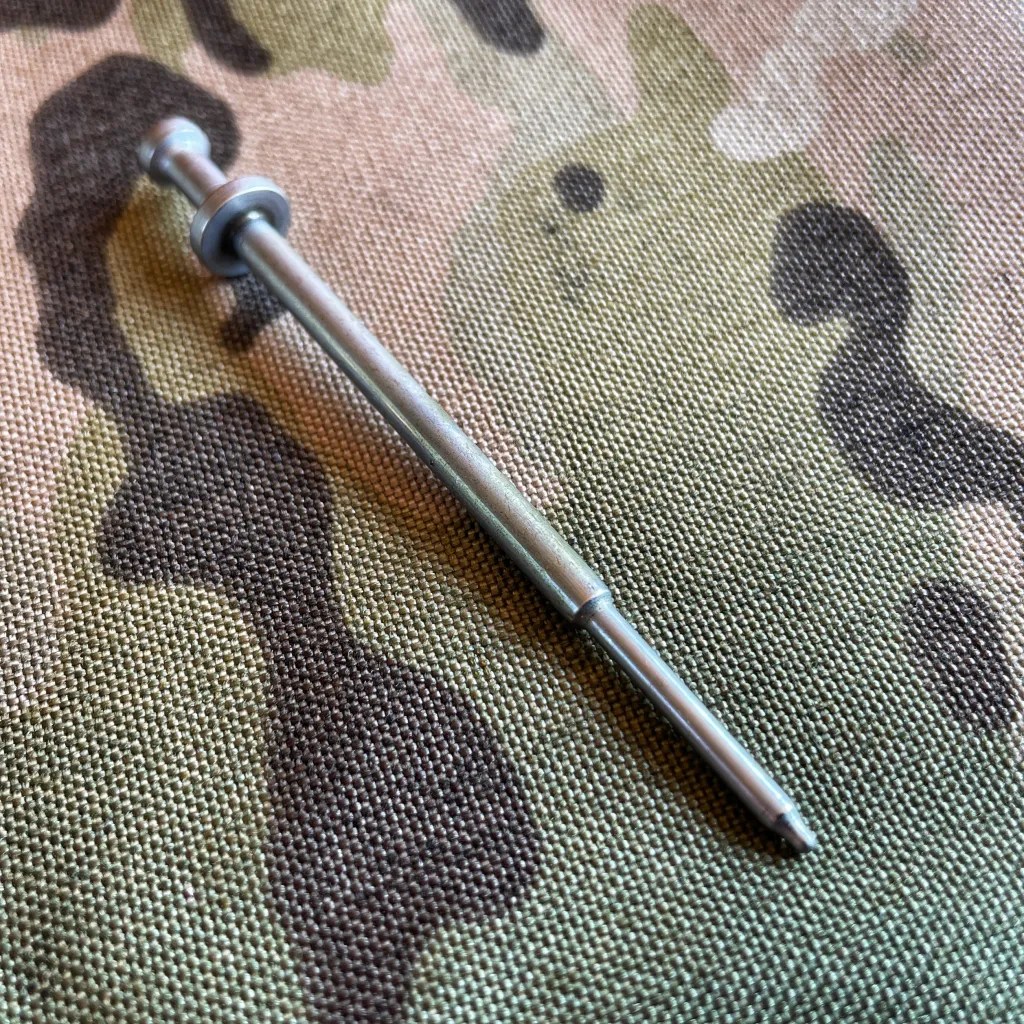


As part of the UIC MOD 2 design, ADM includes the Raptor AmbidextrousCharging Handle from Radian Arms. The charging handle itself is made from aircraft-grade 7075-T6 aluminum, which is a material widely known for its strength. Dual latches on either side allow for ambidextrous operation of the charging handle whereby the palm can be used in a “bladed” fashion, or in the more typical finger/thumb use. The Raptor is anodized to the same MILSPEC standards as the upper receiver.


At the heart of select versions to the UIC MOD 2 is a Criterion Hybrid profile barrel. In the instance of an 18″ barrel, the Hybrid is made from Stainless Steel 416R (with a Nitride Finish) whereas the 10.5, 12.5, 14.5, 16″ barrels are made from 4150 Chrome Moly Vanadium (CMV) steel. In contrast, other select barrels in the MOD 2 line (11.5” or 13.9”) are also made by Criterion, but utilize the CORE profile barrel also made from 4150 CMV. The Hybrid barrels emphasize the same accuracy and balanced weight with a continual profile the full length of the barrel. The Hybrid barrel utilizes the same 1 in 8 twist as the CORE, and is chambered in the more modern .223 Wylde that gives the largest level of stabilization and utilization between 5.56 NATO and .223 caliber ammunition. The Hybrid barrel’s bore is hand lapped with 1/2×28 TPI threading (to accommodate a variety of aftermarket devices), and overall finalized with a nitride finish to prevent any corrosion. The barrel itself has a gas port of 0.0925” for use with or without suppressors, and allots for a gas block with a .750” journal and dimpled for a set screw.


At the front of the MOD 2 ADM has elected to use a Surefire Warcomp flash hider. The three-prong design of the Warcomp comes from a single bar of stainless steel that eliminates 98% of the overall flash from a rifle, and the porting all but eliminates muzzle rise caused by recoil. These features also provide multiple surfaces for suppressor alignment, although the Warcomp can also be timed for either neutral, left, or right-handed shooters. To finish out the flash hider, the Warcomp is DLC-coated for improved durability and longevity.


At the forend of the UIC MOD 2, ADM has designed proprietary MLOK handguard that is made from 6061 T6 aluminum, with clamping screws, and anti-walk screw, and an anti-rotation pin. This ensures proper alignment, and no inadvertent “walking” of the handguard over time due to recoil. ADM offers the handguard in either black hard coat anodization, or in an optional cerakote finish (wait times apply).


The overall UIC MOD 2 Upper Receiver with 18” barrel is available in anodized Black (featured), or can be cerakote to OD Green, Grey, Midnight Bronze, or FDE (wait times apply).
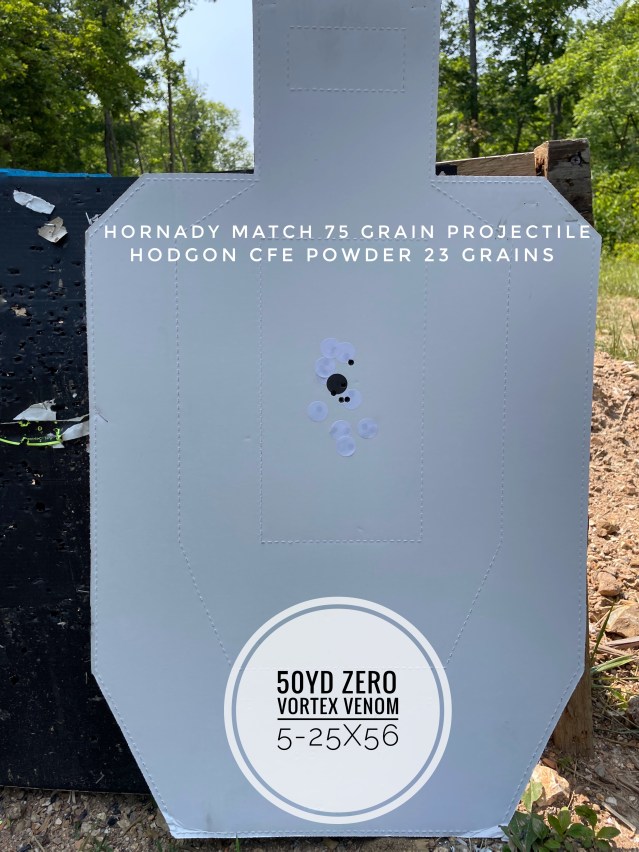


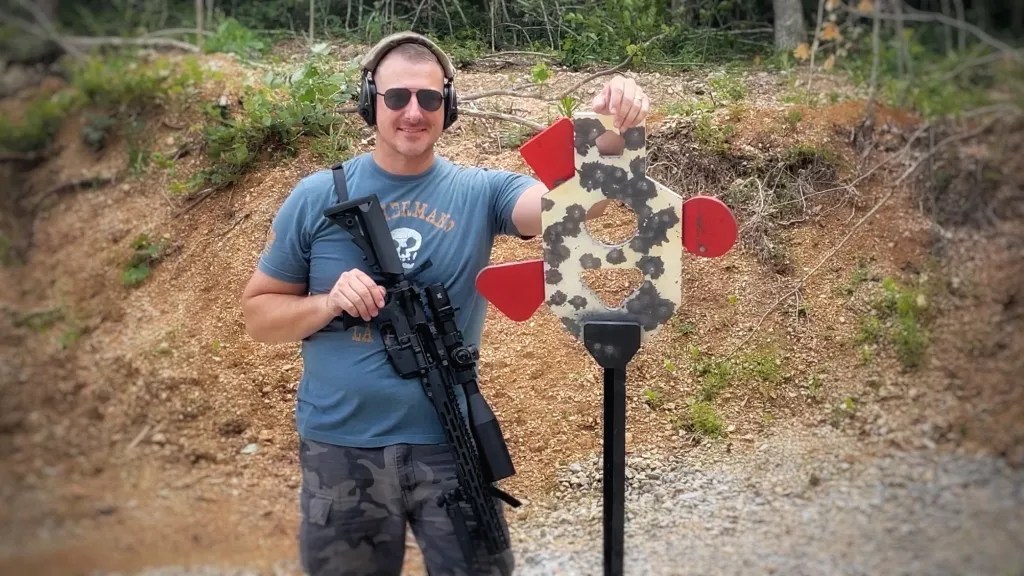
***Editor’s Note: For the purposes of this review, the UIC MOD 2 18” upper receiver was paired with a demo Aero lower using a LaRue MBT. Additionally, other accessories were added as testing became more complex. These elements were not factored as part of the upper receiver’s evaluation and merely used to assist in testing).




Product Evaluation Scores:
Overall Rating – Good (20/25)
Product Link: https://www.admmfg.com/adm-mod2-complete-upper-556

I am reviewing this product as a courtesy to the manufacturer and via High Ground Media, LLC, so that I can evaluate it and provide my honest feedback. I am not bound by any written, verbal, or implied contract to give positive reviews. All views are my own, and based off my personal experience with the product.
The views and opinions expressed on this website are solely those of the author. The views and opinions do not necessarily represent those of the administrative staff, and/or any/all contributors to this site.